
Sarasota County Multi-Day Arrest Log
The county posts no single page listing every booking. There is no fixed window for the past week or any other span. The one official tool that comes close is the SCSO Arrests & Inmate Search. It covers current and prior offenses. Even so, it does not promise a complete date-bounded list. The SCSO news archive picks and chooses its stories. The county dispatch log tracks public-safety events, not people booked into the Sarasota County Jail.
That distinction shapes how any arrest log should be read. The official search verifies a result. It is one the agency itself holds. A date-based publisher might surface an older entry. But its count, order, labels, and photos never prove full coverage. Always compare the arrest date, booking date, agency, and case identifiers against the official record. Do that before trusting what a secondary page shows.
Read Sarasota County Arrest Dates
Begin with the time span, not the entry count. A multi-day index often sorts by publication time instead of arrest or booking time. Weekend processing, delayed collection, and later edits can push an older event next to a newer one. Pagination can bury earlier dates, too.
- Choose the dates to review and write down the retrieval date and time.
- Search the official SCSO system and inspect whether the result is current or prior.
- Compare arrest date with booking date; transport and intake can make them differ.
- Identify the arresting agency, which holds the report even when SCSO handles booking.
- Use the case or booking number to request the source record and follow court events.
Chasing a brand-new booking rather than a run of dates calls for a different page. Sarasota County 24 Hour Arrests walks through the same-day confirmation path. Keep the two windows separate.
Sarasota County Arrest Log Fields
Every source shows different fields. The Sheriff's embedded search reveals its fields only when you open a live result, so treat the visible ones as guaranteed. Secondary pages sometimes add physical descriptors or booking photos that the Sheriff's own search does not display.
| Field | Reading rule |
|---|---|
| Name and identifiers | Separate similar matches and confirm with an agency record. |
| Arrest date | The alleged enforcement event, which may precede booking. |
| Booking date | The jail intake date, not necessarily the publication date. |
| Arresting agency | The office from which the underlying report should be requested. |
| Charge and bond | Intake charges and changing terms. |
| Photo | May appear on secondary records; official public display was not verified. |
A blank field has several possible causes. The source may not collect it, the record may not have posted, or an exemption may apply. A missing entry never proves that no Sarasota County arrest took place.
Sarasota Arrest Logs After Weekends
SCSO follows no fixed weekend or holiday posting schedule. Its own disclaimer says records update regularly. They can change fast and lag behind for technical reasons. So do not pin a precise delay on a Monday entry. Do not assume weekend bookings drop in one batch either.
Sarasota County Jail averages 50 to 60 bookings a day. Every person goes through paperwork and warrant review. Fingerprints, a booking photo, medical screening, and classification follow. A result that appears after a weekend may reflect a later update. The stated booking date has to back that up.
Sarasota Arrest News Is Selective
The SCSO news release archive collects official agency statements with their dates. It can add useful context around a notable arrest or operation. It does not list every person booked into Sarasota County Jail. View the official SCSO news list to see the release-and-date format for yourself.
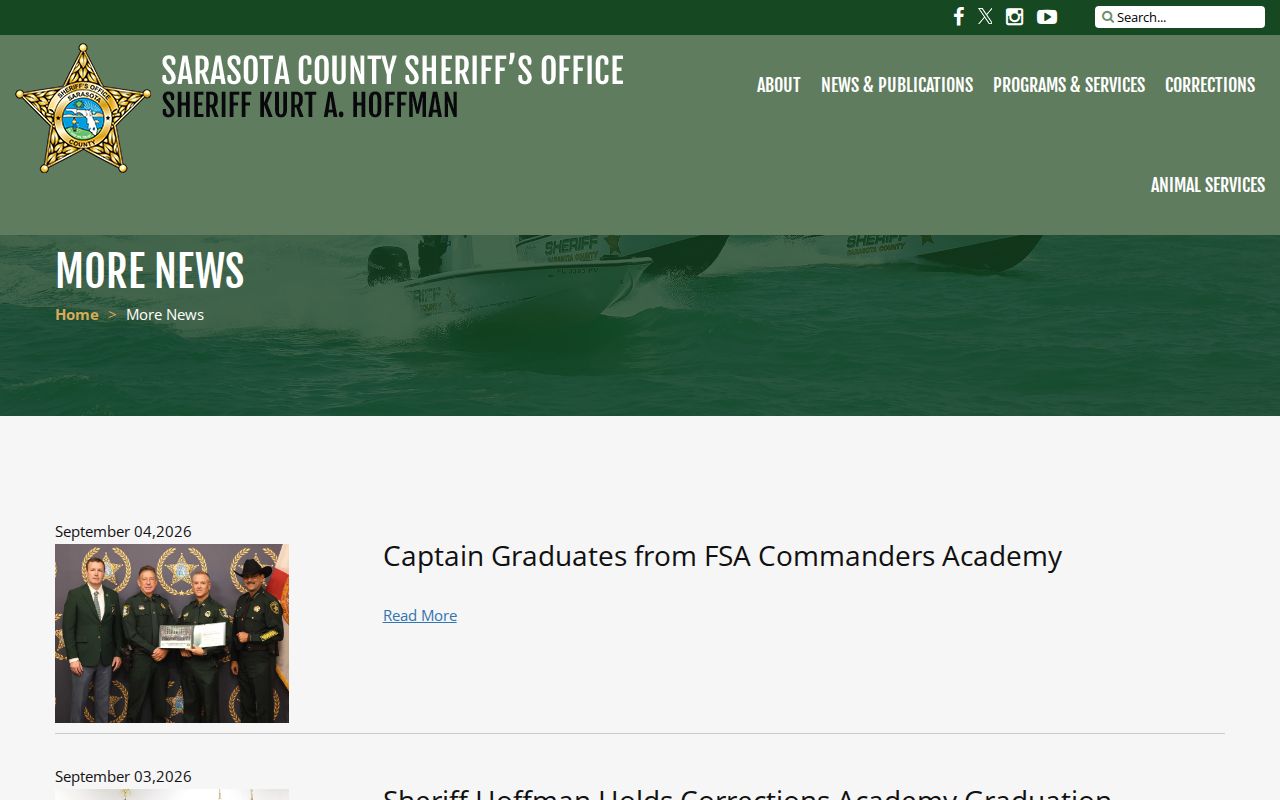
Read that news list as selected agency announcements, not a booking feed. Your Observer's Cops Corner and MySuncoast crime coverage take a narrative approach. They quote agencies and tell stories. Both outlets pick which arrests to cover, and their early details often shift. Go back to the originating agency for the actual record.
Sarasota Arrest Archive Limits
Several unofficial sites organize Sarasota County entries by date. Florida Arrests lets you navigate by county and day. RecentlyBooked keeps a rolling 30-day index. Busted Newspaper and Mugshots.zone sort by county or month. Mugshots.com works best as an older year-and-city index. None of them is an official Sarasota County blotter. A secondary view of Mugshots.zone's Sarasota archive shows the monthly navigation in action.
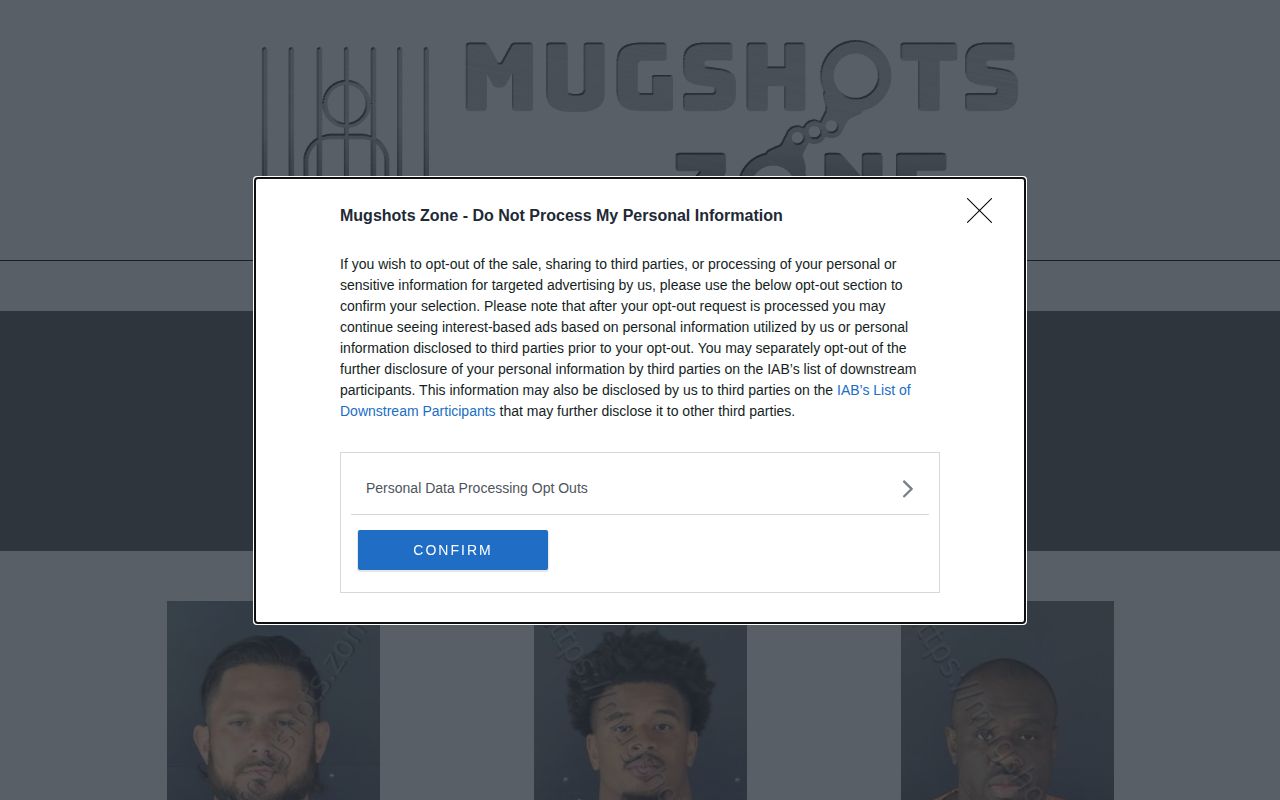
An archive can hand you a date lead and nothing more. Entries and booking photos still need official confirmation. Pages can go stale or stay incomplete. Counts shift between visits. Labels may point to the arrest location, the agency's base, or the jail. Others mark a publisher's own category. Never treat an unofficial tally as the county total. Never read current custody into an old photo.
Sarasota Arrests and Agency Context
The Sarasota County dispatch log shows which agencies worked a given date range. Its list includes SCSO, Sarasota Police, Venice Police, and Longboat Key Police. Sarasota Schools Police and county fire agencies appear too. Updates arrive every 15 minutes. That speed still does not make dispatch a blotter. An event can close with no arrest at all. A booking can grow from an event outside your selected view. Treat the agency, time, location, grid, zone, case, and event-number columns as incident context only.
Note: A dispatch event is not an arrest record and should never be converted into a booking or charge.
Older Sarasota County Arrest Records
Once an arrest falls out of the online index, one place can help. Ask the office that holds the record. SCSO Records takes requests through GovQA, email, mail, and walk-in visits. The arresting city police department keeps its own incident report. That stays true even when the person was booked at Sarasota County Jail. Include a full name, the date and place, and the agency. Add any case or booking number you know. Finish with a plain description of the record you want.
Florida treats arrest records, offense reports, and jail booking records as separate retention series. Commitment or release lists form their own series too. Some run on anniversary or fiscal years. A file can sit with the agency long after it leaves public search. Sealed, expunged, confidential, or exempt records carry their own access rules.
For the court side, turn to the Sarasota County Clerk courts system. It holds criminal case information back to 2003. The Clerk court-event navigation shows what happened after an arrest. Read entries as "case event" unless a final disposition is plainly stated.
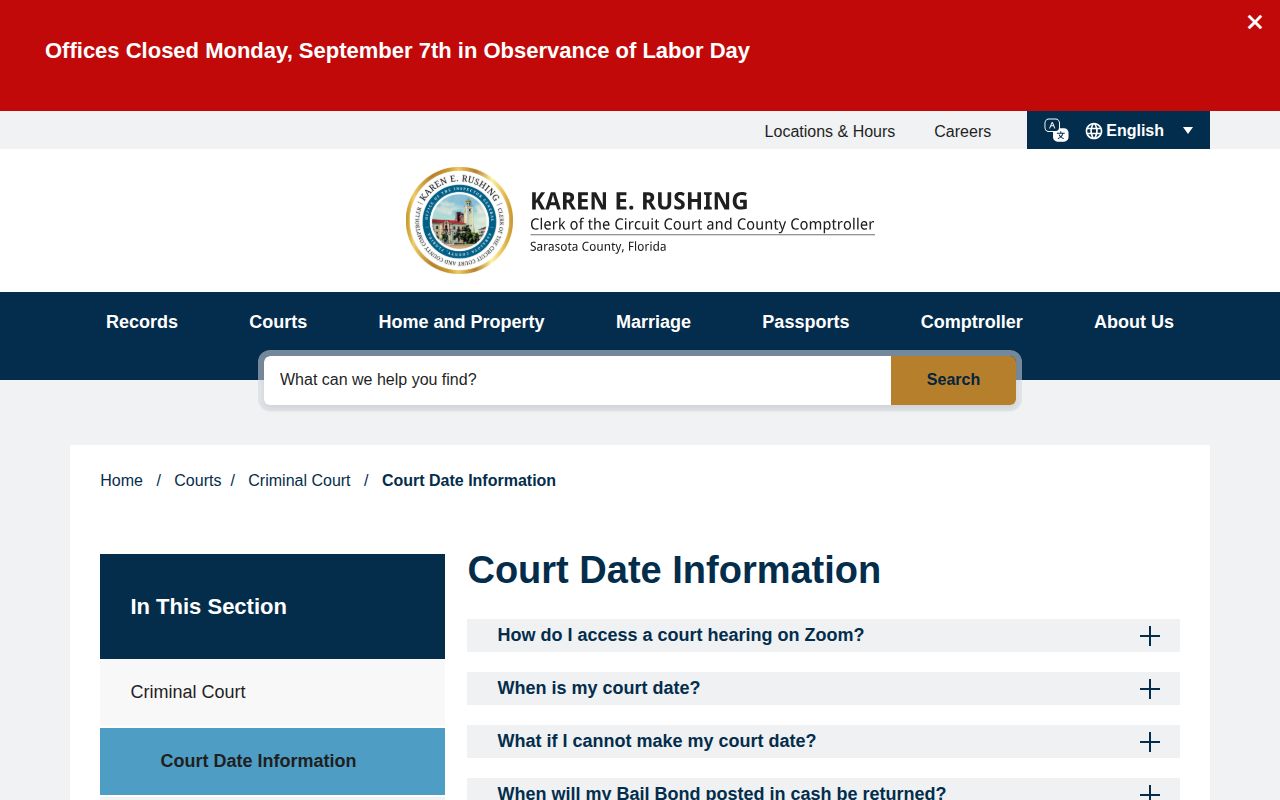
This screen is where a Sarasota County arrest turns into a court case. It lists case events. Any final outcome appears only once the court enters it.
Sarasota Arrest Entries Need Context
An arrest entry is a custody step, nothing more. Charges can change, get reduced, or fall away entirely as a case moves. The Sheriff's arrest search is not a final-outcome database. The Clerk's record tells that later story, so check the identity and case number first. Never tie an old Sarasota County arrest entry to a living person without them.
Always save the source label and date with any note you keep. A screenshot of a shifting page proves nothing about custody months later. A record may age out of public view. A records request should then name the date range and the document type. That could be an arrest report, booking record, commitment list, or release list. Narrow requests help the right agency find the file and explain any exemption that applies.
Legal limits can also wall off older arrest material. ClerkNet leaves out sealed and confidential content. Expungement can change what the public may see. A blank search result may mark a legal boundary rather than a failed lookup. The creating agency or the Clerk can say what status it is allowed to disclose.
Keep source labels precise. "Sheriff news release," "dispatch event," "secondary date index," and "official arrest search" describe different kinds of evidence. Merging them into one blotter hides the limits of each channel. A brief incident mention could harden into an unsupported booking claim.
When a public page stops short of the date you need, try SCSO's public-records route. It is the practical archive. Requests go through GovQA. Email Records@sarasotasheriff.org, use mail, or appear in person at the Criminal Justice Center. The Records line is 941-861-4025. SCSO charges 15 cents per single-sided page and 20 cents per double-sided page. The first half-hour of staff time is free. Extensive work can add fees and may require a deposit.
No special arrest-log form or fixed turnaround exists. A tight request helps. List the date range, person, arresting agency, location, and any known case or booking number. Ask for the exact record type rather than "everything." An offense report, arrest affidavit, and booking record are separate records. So are commitment lists, release lists, and court cases. Each follows different rules.